Our framework

The 6 Pillars of Period Wellness

Every product Lily & Fi makes, every recommendation we offer, every piece of content we publish is grounded in one framework: the six evidence-based pillars that form the complete picture of menstrual health. This is not wellness marketing. This is the science.

Shop the products READ THE BLOG

04 Pillar Four

Nutrition and Hydration

Your body does not have the same nutritional needs every day of your cycle. The research is clear. The dietary advice most Caribbean women have received is not.

30%

of women globally are estimated to be anaemic, with menstrual blood loss as a primary contributing factor — particularly in adolescents and women with heavy cycles. The majority are undiagnosed.

World Health Organization, Global Anaemia Estimates, 2021

Menstruation is a physiological event with measurable metabolic consequences. Average menstrual flow volumes range from 5–80ml — with anything above 80ml classified as heavy menstrual bleeding — representing a significant loss of iron in the form of haemoglobin. For women already operating with marginal dietary iron intake, this monthly loss can tip iron stores into deficiency territory, with consequences that extend well beyond fatigue.

Iron deficiency anaemia impairs cognitive function, physical endurance, immune response, and emotional regulation. Many of the symptoms commonly attributed to “period symptoms” — brain fog, persistent tiredness, breathlessness, irritability — may be iron deficiency presenting as a cycle issue. They are related, but the mechanism is nutritional, and it is addressable.

Iron absorption is as important as intake

The form in which iron is consumed and the dietary context of that consumption dramatically affects how much the body actually absorbs. Haem iron from animal sources (red meat, organ meats, shellfish) is absorbed at approximately 25% bioavailability. Non-haem iron from plant sources (lentils, spinach, fortified cereals, pumpkin seeds) is absorbed at 5–12% under typical conditions — but this rate can be significantly modulated:[1]

  • Vitamin C increases non-haem iron absorption by up to three-fold when consumed at the same meal (e.g., citrus juice with iron-rich food)
  • Calcium inhibits iron absorption — dairy and iron-rich foods are best consumed at separate meals
  • Tea and coffee (tannins) reduce absorption by up to 60% when consumed within an hour of an iron-rich meal
  • Cooking in cast iron transfers small but measurable amounts of dietary iron into food

MAGNESIUM AND THE MENSTRUAL CYCLE

Magnesium plays a documented and clinically relevant role in menstrual health. Research has consistently found that women with premenstrual syndrome (PMS) and primary dysmenorrhea have significantly lower intracellular magnesium levels than women without these conditions.[2] The mechanism is physiologically sound: magnesium is a calcium antagonist in smooth muscle, meaning it promotes muscle relaxation — counteracting the uterine contractions that produce cramping. It also modulates the HPA (stress) axis and plays a role in serotonin synthesis, connecting it directly to mood symptoms.

A 2022 review examining dietary supplementation for PMS found consistent evidence that magnesium reduced both affective symptoms (irritability, mood changes, depression) and physical symptoms (bloating, breast tenderness, cramping) compared to placebo.[3]

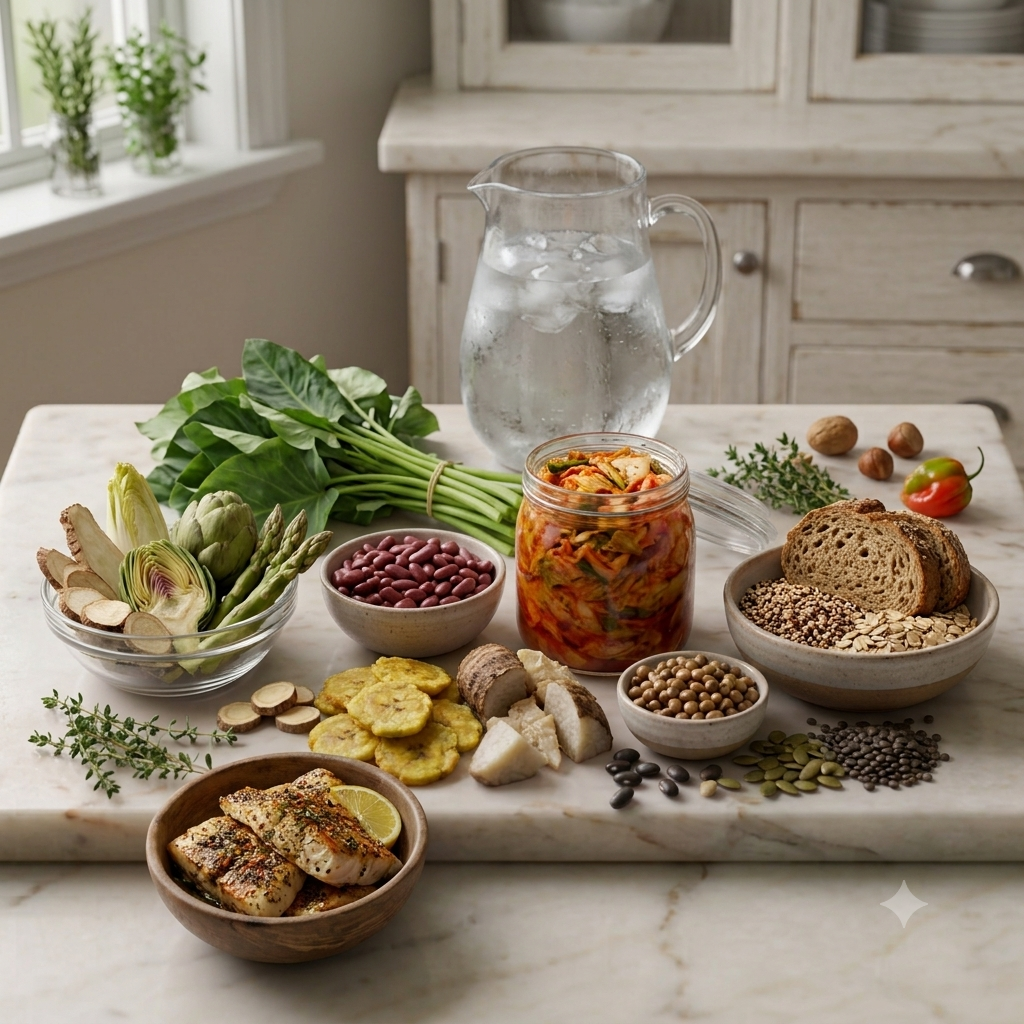
The dietary pathway is accessible. Magnesium-rich foods include dark leafy greens, legumes (black beans, chickpeas), pumpkin seeds, almonds, and dark chocolate — many of which are staples or near-staples of Caribbean cuisine. 

Photo courtesy Nathan Cowley

“Tell me what you eat, and I will tell you what you are,”

Jean Anthelme Brillat-Savarin

Omega-3 Fatty Acids: Anti-inflammatory Nutrition

Omega-3 fatty acids — specifically EPA (eicosapentaenoic acid) and DHA (docosahexaenoic acid) — reduce prostaglandin synthesis by competing with arachidonic acid in the cyclooxygenase pathway. This makes them directly relevant to period pain management: lower prostaglandin production, less uterine cramping. Multiple randomised controlled trials support omega-3 supplementation as a clinically meaningful adjunct to pain management for primary dysmenorrhea.[4]

Dietary sources include oily fish (particularly sardines, mackerel, salmon), flaxseed, chia seeds, and walnuts. Given T&T’s coastal geography and the availability of fresh fish, the dietary case for increasing omega-3 intake is practically and culturally accessible — when women know why it matters.

Hydration: The Overlooked Variable

Estrogen and progesterone fluctuations across the cycle influence fluid retention, electrolyte balance, and thirst sensitivity. Counterintuitively, increased water intake during the premenstrual and menstrual phases can reduce water retention-related bloating by supporting renal clearance of the aldosterone involved in retention. Hydration also reduces blood viscosity, which may contribute to easier menstrual flow in some individuals.

In a Caribbean climate with ambient temperatures often exceeding 30°C, baseline hydration requirements are higher than the standard 2-litre recommendation designed for temperate climates. Adjusting hydration guidance for heat, physical activity, and cycle phase is a simple but meaningful personalization.

🌴 Caribbean Food, Caribbean Science

Much nutritional research is conducted in North American and European contexts with food environments that do not reflect Caribbean dietary realities. Lily & Fi is committed to translating the evidence base into guidance that works with local food culture — not against it. Dasheen leaves, callaloo, breadfruit, black-eyed peas, fresh fish, sorrel, and sea moss all have nutritional profiles relevant to menstrual health. The science of period nutrition does not have to be imported.

References — Pillar 04
  1. Lynch, S.R., & Cook, J.D. (1980). Interaction of vitamin C and iron. Annals of the New York Academy of Sciences, 355, 32–44. [Foundational study on iron absorption modulation. Confirmed by multiple subsequent reviews.]
  2. Fathizadeh, N., Ebrahimi, E., Valiani, M., Tavakoli, N., & Yar, M.H. (2010). Evaluating the effect of magnesium and magnesium plus vitamin B6 supplement on the severity of premenstrual syndrome. Iranian Journal of Nursing and Midwifery Research, 15(Suppl 1), 401–405.
  3. Cerqueira, R.O., Frey, B.N., Leclerc, E., & Brietzke, E. (2017). Vitex agnus castus for premenstrual syndrome and premenstrual dysphoric disorder: a systematic review. Archives of Women’s Mental Health. 
  4. Mohammadi MM, Mirjalili R, Faraji A. The impact of omega-3 polyunsaturated fatty acids on primary dysmenorrhea: a systematic review and meta-analysis of randomized controlled trials. Eur J Clin Pharmacol. 2022 May;78(5):721-731. doi: 10.1007/s00228-021-03263-1. Epub 2022 Jan 21. PMID: 35059756.
  5. World Health Organization. (2023). Anaemia. Global Health Observatory data. https://www.who.int/data/gho/data/indicators/indicator-details/GHO/prevalence-of-anaemia-in-pregnant-women-(-)

Click below to read the previous pillar.

pain management

Click below to read the next pillar.

mood and physical wellbeing