Our framework

The 6 Pillars of Period Wellness

Every product Lily & Fi makes, every recommendation we offer, every piece of content we publish is grounded in one framework: the six evidence-based pillars that form the complete picture of menstrual health. This is not wellness marketing. This is the science.

Shop the products READ THE BLOG

05 Pillar Five

mood and physical wellbeing

Premenstrual mood changes are not a personality issue. They are a neurological event driven by measurable hormonal shifts — and they are manageable with the right evidence-based tools.

3 – 8%

of menstruators meet diagnostic criteria for Premenstrual Dysphoric Disorder (PMDD) — a clinically significant and frequently misdiagnosed neurological condition of hormonal sensitivity. PMS, in milder forms, affects up to 40%.

Gudipally & Sharma, StatPearls, 2023; American College of Obstetricians and Gynecologists

The menstrual cycle is a hormonal cycle with direct neurological consequences. Estrogen and progesterone do not only act on reproductive tissue — they modulate neurotransmitter systems throughout the brain. Estrogen supports serotonin synthesis and receptor sensitivity; its decline in the late luteal phase (days 21–28) is associated with reduced serotonergic tone, contributing to low mood, irritability, and anxiety. Progesterone metabolites interact with GABA receptors — the same receptors targeted by benzodiazepines — with effects on anxiety, sleep, and emotional regulation.[1]

This is not metaphor. These are measurable, documented interactions between reproductive hormones and neurotransmitter systems. The mood changes of the luteal phase have a biological substrate. Naming that substrate is the first step toward managing it.

PMS vs PMDD

Premenstrual syndrome (PMS) refers to a cluster of physical and emotional symptoms that occur predictably in the luteal phase and resolve within the first few days of menstruation. Symptoms include irritability, mood swings, food cravings, bloating, fatigue, and breast tenderness. PMS is common — affecting 20–40% of menstruating people to some degree — and generally responsive to lifestyle interventions

Premenstrual Dysphoric Disorder (PMDD) is distinct and more severe. It is classified in the DSM-5 as a depressive disorder and characterised by debilitating mood symptoms — severe depression, rage, anxiety, emotional overwhelm — that significantly impair function. Emerging research by Eisenlohr-Moul and colleagues (2020–2022) has reframed PMDD not as excessive hormone production but as a heightened neurological sensitivity to normal hormonal fluctuations — a distinction with important treatment implications.[2]

⚠️ PMDD Requires Clinical Assessment

If premenstrual mood symptoms are severe, involve thoughts of self-harm, significantly impair relationships or work function, or include episodes that feel beyond your control, please seek evaluation from a healthcare provider. PMDD is treatable — with SSRIs (used cyclically or continuously), hormonal management, and evidence-based lifestyle interventions. It is not something to manage alone.

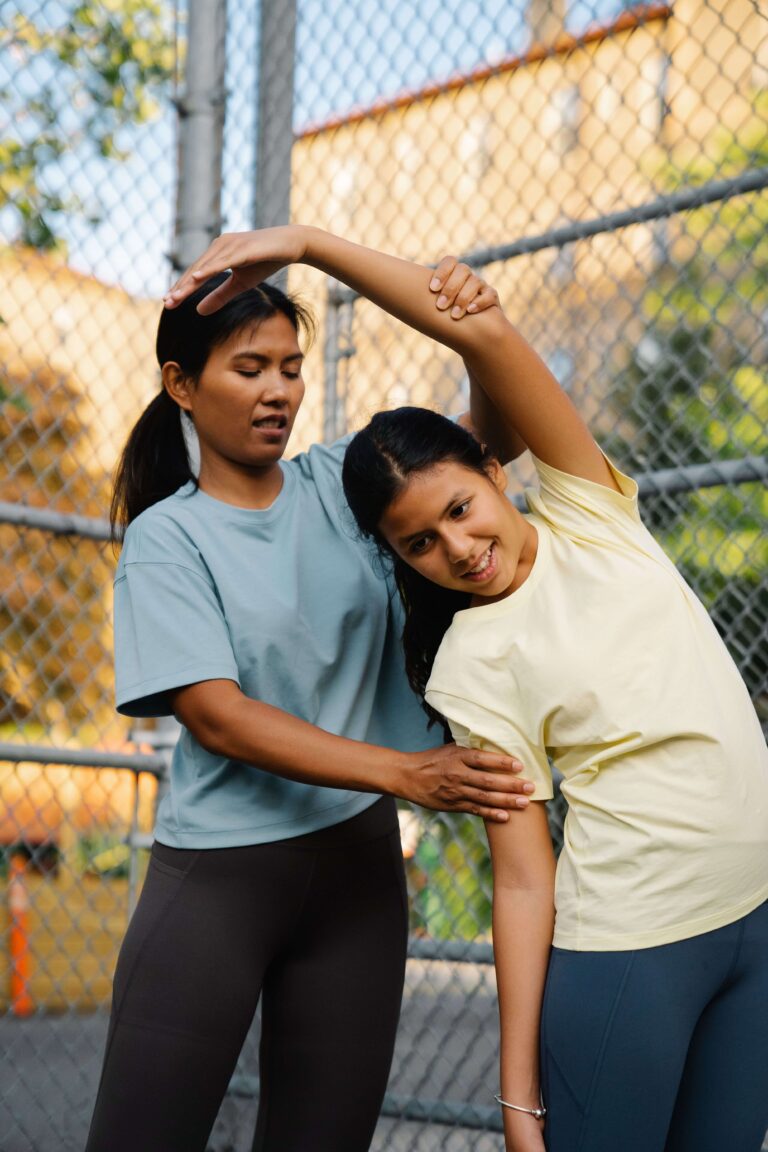
Photo courtesy Liliana Drew

Exercise as Mood Medicine: What the Research Shows

A growing body of evidence demonstrates that regular aerobic exercise is one of the most effective non-pharmacological interventions for PMS and related mood symptoms. A 2021 systematic review found moderate evidence that regular aerobic activity reduced the severity of PMS symptoms — including mood symptoms — by 35–50% compared to sedentary controls.[3] The mechanisms include increased serotonin and endorphin availability, cortisol modulation, and buffering of the neurological response to hormonal fluctuation.

The specific timing of exercise across the cycle also matters. Exercise during the follicular phase (days 1–14, post-menstruation), when oestrogen is rising and energy is relatively higher, tends to feel easier and produces greater performance gains. Exercise in the luteal phase may feel harder but carries particular mood benefits when sustained. Cycle-aware training — adjusting intensity and type to cycle phase — is supported by emerging research on infradian rhythm physiology.

Cycle Literacy and Physical Capacity

Research on athletic performance across the menstrual cycle has found measurable differences in strength, endurance, injury risk, and recovery time at different cycle phases. These differences are hormonally mediated — oestrogen improves muscle repair and ligament laxity varies with cycle phase, affecting injury risk. Understanding your cycle phase is therefore not just about mood management; it is relevant to how you train, how you recover, and how you protect your body from injury.[4]

🌴 Naming the Biology in a Culture That Often Won’t

Caribbean cultural frameworks do not always create space to name or validate emotional experiences associated with menstruation. Mood symptoms are often attributed to personality, “stress,” or a failure of self-control rather than to the measurable hormonal events causing them. This cultural silencing delays care-seeking for PMDD and contributes to years of unnecessary suffering. Lily & Fi’s commitment is to provide the vocabulary and the biology that allows Caribbean women to understand what is happening in their bodies — and to feel entitled to address it.

References — Pillar 05
  1. Bäckström, T., Bixo, M., Johansson, M., Nyberg, S., Ossewaarde, L., Ragagnin, G., Savic, I., Strömberg, J., Timby, E., van Broekhoven, F., & van Wingen, G. (2014). Allopregnanolone and mood disorders. Progress in Neurobiology, 113, 88–94. 
  2. Hantsoo L, Payne JL. Towards understanding the biology of premenstrual dysphoric disorder: From genes to GABA. Neurosci Biobehav Rev. 2023 Jun;149:105168. doi: 10.1016/j.neubiorev.2023.105168. Epub 2023 Apr 12. PMID: 37059403; PMCID: PMC10176022.
  3. Mohebbi Dehnavi, Z., Jafarnejad, F., & Sadeghi Goghary, S. (2018). The effect of 8 weeks aerobic exercise on severity of physical symptoms of premenstrual syndrome: a clinical trial study. BMC Women’s Health, 18, 80. https://doi.org/10.1186/s12905-018-0565-5 
  4. Bruinvels, G., Goldsmith, E., Blagrove, R., Simpkin, A., Lewis, N., Morton, K., Suppiah, A., Rogers, J.P., & Burden, R. (2021). Prevalence and frequency of menstrual cycle symptoms are associated with availability to train and compete. British Journal of Sports Medicine, 55(8), 451–457. https://doi.org/10.1136/bjsports-2019-101927
  5. Gudipally, P.R., & Sharma, G.K. (2023). Premenstrual Syndrome. In StatPearls [Internet]. StatPearls Publishing. Available from: https://www.ncbi.nlm.nih.gov/books/NBK560698/

Click below to read the previous pillar.

nutrition and hydration

Click below to read the next pillar.

sleep and comfort